Shoulder and rotator cuff treatment
Diagnosing and treating the common causes of shoulder pain — rotator cuff tears, impingement, frozen shoulder, and instability.
Also called: Rotator cuff repair · Shoulder arthroscopy · Frozen shoulder treatment
What shoulder & rotator cuff is
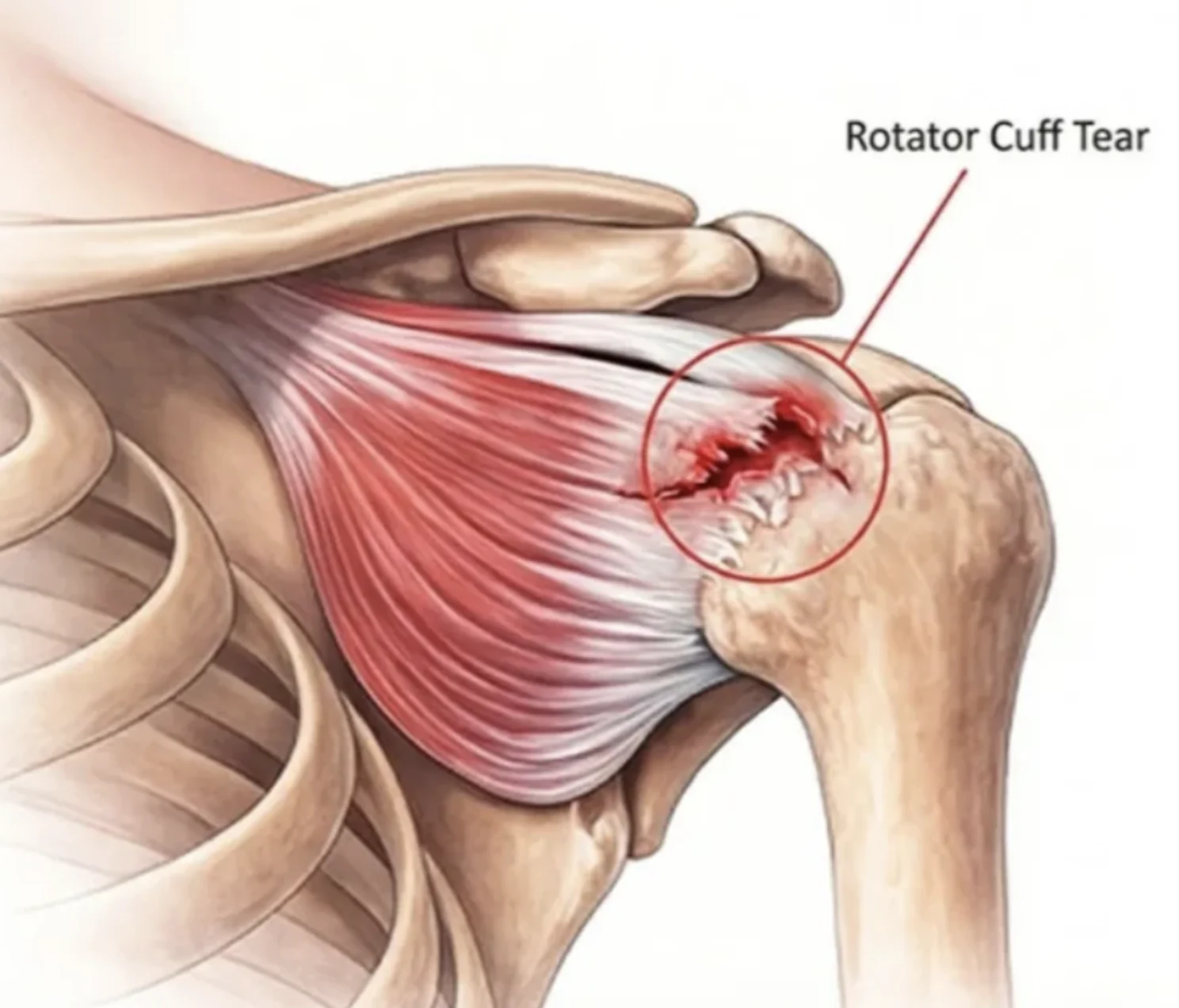
The rotator cuff is a group of four tendons that hold the ball of the shoulder into its shallow socket and lift the arm. Pain when reaching overhead, weakness lifting the arm, and pain lying on that side at night are the classic signs of a cuff problem.
Shoulder pain has several distinct causes that are treated very differently, so the diagnosis matters more than in most joints. A frozen shoulder, a rotator cuff tear, and shoulder arthritis can all hurt in the same place but need entirely different plans.
Who needs it
These are the signs that usually bring someone to a consultation about this. Having one of them does not mean you need the procedure — it means it is worth assessing.
- Pain reaching overhead, behind the back, or across the body
- Night pain, particularly when lying on the affected shoulder
- Weakness lifting the arm, or an arm that drops when raised
- A shoulder that has become progressively stiff in all directions — the pattern of a frozen shoulder
- A shoulder that dislocates or feels like it might slip out
Most shoulders improve without surgery
A large proportion of shoulder problems settle with a well-designed physiotherapy programme and time. Frozen shoulder in particular usually resolves without an operation, though it can take many months.
- Structured physiotherapy aimed at the specific diagnosis, not generic exercises
- Activity modification and pain relief
- A targeted injection in selected cases, often to allow physiotherapy to progress
- Surgery is considered when a significant tear is confirmed, or when a fair trial of non-surgical care has failed
How it is done at Poona Orthopaedic Clinic
Shoulder problems are assessed by Dr. Atul Keswani, who completed a shoulder surgery fellowship at the University of Cattolica in Italy. Most rotator cuff pain, impingement and frozen shoulder is treated without an operation — exercises, injections where useful, and time. When a cuff tear needs repair, or a shoulder keeps dislocating, keyhole surgery is done at an affiliated hospital with a structured rehabilitation plan afterwards.
- Examination and, where needed, ultrasound or MRI to tell the common causes apart
- Non-surgical treatment first for most shoulder pain
- Arthroscopic cuff repair and stabilisation at an affiliated hospital when surgery is the right answer
- Rehabilitation planned before surgery and reviewed at the clinic
Recovery, honestly
Timelines vary between patients. This is the usual shape of recovery rather than a promise about your own.
After a cuff repair, weeks 0–6
The arm is protected in a sling and active lifting is avoided so the repaired tendon can heal to bone. Gentle assisted movement is started early.
Weeks 6–12
Active movement is reintroduced progressively under physiotherapy guidance.
Months 3–6
Strengthening. Most patients see steady improvement in reach and comfort through this period.
6–12 months
Full recovery of strength after a rotator cuff repair is slow, and improvement continues for up to a year.
Questions patients ask
A frozen shoulder becomes stiff in every direction, including when someone else moves your arm for you. A cuff tear is more often painful and weak but not globally stiff. Examination usually distinguishes them, sometimes with an ultrasound or MRI.
No. Small and partial tears, and tears in less active patients, often do well with physiotherapy. Larger tears in active patients, and tears causing real weakness, are more likely to be recommended for repair.
A repaired tendon is stitched back to bone and needs protected time to heal. Lifting the arm actively too early is the main cause of a repair failing.
It typically runs a course of many months to a couple of years, moving through painful, stiff, and thawing phases. Treatment aims to control pain and shorten the stiff phase rather than cure it overnight.
What patients say
Experiences with shoulder & rotator cuff live on the clinic’s Google profile, exactly as patients wrote them — we link to reviews rather than curating them here.
Related symptoms
Considering shoulder & rotator cuff?
Bring your X-rays or MRI if you have them. A consultation should leave you clear about what is wrong, what the options are, and what happens if you wait.