Knee arthroscopy
Keyhole knee surgery — a camera and fine instruments through two small incisions — for meniscus tears, ACL reconstruction, loose fragments and damaged cartilage.
Also called: Keyhole knee surgery · Knee scope · ACL reconstruction · Meniscus repair · Meniscectomy
What knee arthroscopy is
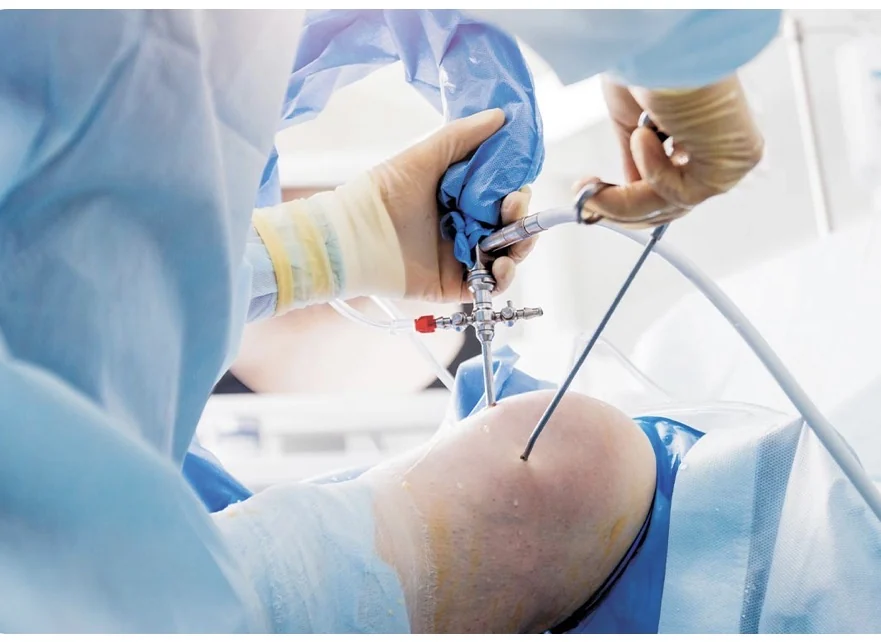
Arthroscopy means looking inside a joint with a small camera. Through two or three incisions the width of a pencil, the surgeon can inspect the whole knee on a screen and pass fine instruments in to repair or trim damaged tissue.
It is usually a day-care procedure, and because the joint is not opened up, recovery is far quicker than open surgery.
The two operations most often done this way — repairing or trimming a torn meniscus, and reconstructing a torn ACL — each have their own section further down this page, with their own recovery timelines.
Who needs it
These are the signs that usually bring someone to a consultation about this. Having one of them does not mean you need the procedure — it means it is worth assessing.
- A meniscus (cartilage) tear causing catching, locking, or pain along the joint line
- A knee that gives way when turning or pivoting after a ligament injury, most often an ACL tear
- A knee that locks, or a loose fragment inside the joint
- Damaged joint surface (chondral) lesions
- Persistent swelling or pain where the diagnosis is unclear after examination and MRI
An honest word about arthritis
Arthroscopy is very useful for mechanical problems like a torn meniscus that catches or a ligament that has given way. It is not a treatment for established osteoarthritis on its own — good evidence shows that "washing out" an arthritic knee does not give lasting benefit.
- If the main problem is arthritis, non-surgical care or joint replacement is usually the honest answer
- An MRI showing a degenerate meniscus in an arthritic knee does not by itself mean arthroscopy will help
- Many non-locking meniscus tears, and some ACL tears in people who do not pivot, settle with rehabilitation alone
- Any surgeon offering you arthroscopy should be able to explain exactly what mechanical problem it will fix
The two operations most often done through the arthroscope
Both are keyhole procedures, but they are different operations with different recoveries. Each is explained here on its own.
Meniscus repair and trimming
Also called: Cartilage tear surgery · Meniscectomy · Meniscal repair
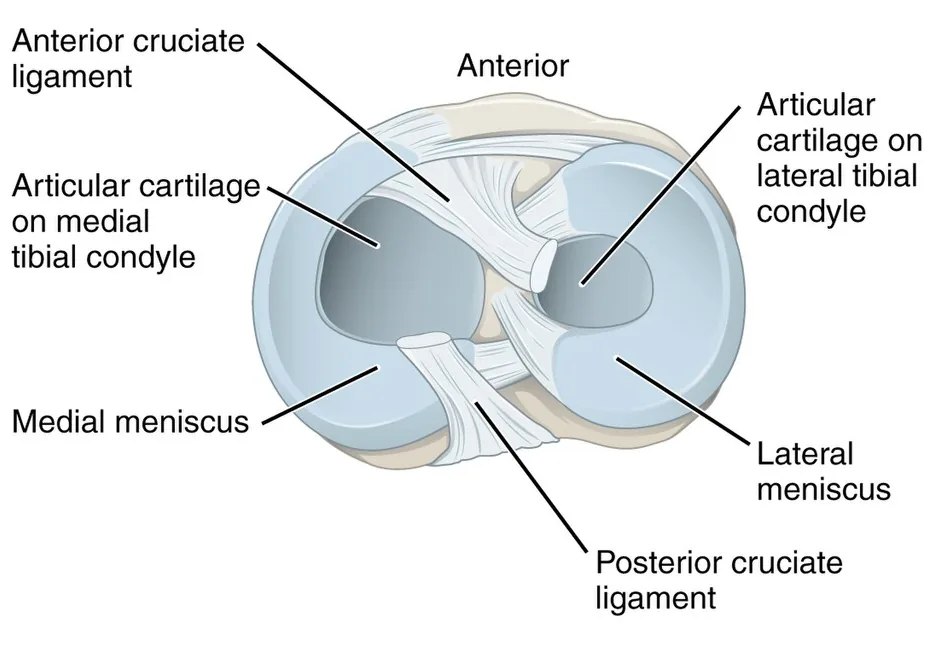
Each knee has two menisci: crescent-shaped pads of tough cartilage that spread load across the joint and act as shock absorbers. They tear either from a twisting injury in a younger knee, or gradually with age in a worn knee.
When surgery is needed it is done arthroscopically. The key decision is between repairing the tear with sutures, which preserves the cushion, and trimming away the torn portion, which relieves symptoms faster but removes tissue permanently.
Who it is for
- A knee that locks, catches, or cannot be fully straightened
- Pain localised to the joint line that persists after several weeks
- Repeated swelling after activity
- A tear pattern on MRI that is suitable for repair, particularly in younger patients
Many tears settle without surgery
Degenerate meniscus tears in older knees frequently improve with time and physiotherapy, and surgery for them has been shown to add little in many cases.
- A trial of physiotherapy and activity modification is reasonable for most non-locking tears
- A truly locked knee that cannot straighten is a stronger reason for early surgery
- Preserving the meniscus matters — a knee that loses meniscus tends to wear faster over the following decades
Recovery, honestly
After a trim
Walking with support the same day, desk work within one to two weeks, and most sport by six to eight weeks.
After a repair, weeks 0–6
Weight-bearing and knee bending are deliberately restricted, often with a brace, so the stitched meniscus can heal.
After a repair, weeks 6–12
Progressive loading, strengthening, and a return to normal walking.
After a repair, 4–6 months
Return to pivoting sport, once strength and control are restored.
Questions patients ask
Where the tear is in a part of the meniscus with a blood supply, repairing it preserves the cushion and protects the knee long term, but recovery is slower. Where a repair will not heal, the torn portion is trimmed, which recovers faster but removes some cushioning.
Because the meniscus has to knit back together, and that takes months. Trimming removes the problem tissue immediately, so symptoms settle faster — but you lose some of the knee's cushioning permanently.
No. Only tears in the outer part of the meniscus have a good enough blood supply to heal. Tears in the inner portion, and heavily degenerate tears, usually cannot be repaired successfully.
Removing meniscus tissue increases the load on the joint surface and is associated with a higher rate of arthritis over the following decades. This is exactly why surgeons try to repair rather than remove wherever it is realistic.
ACL reconstruction
Also called: Anterior cruciate ligament reconstruction · ACL surgery
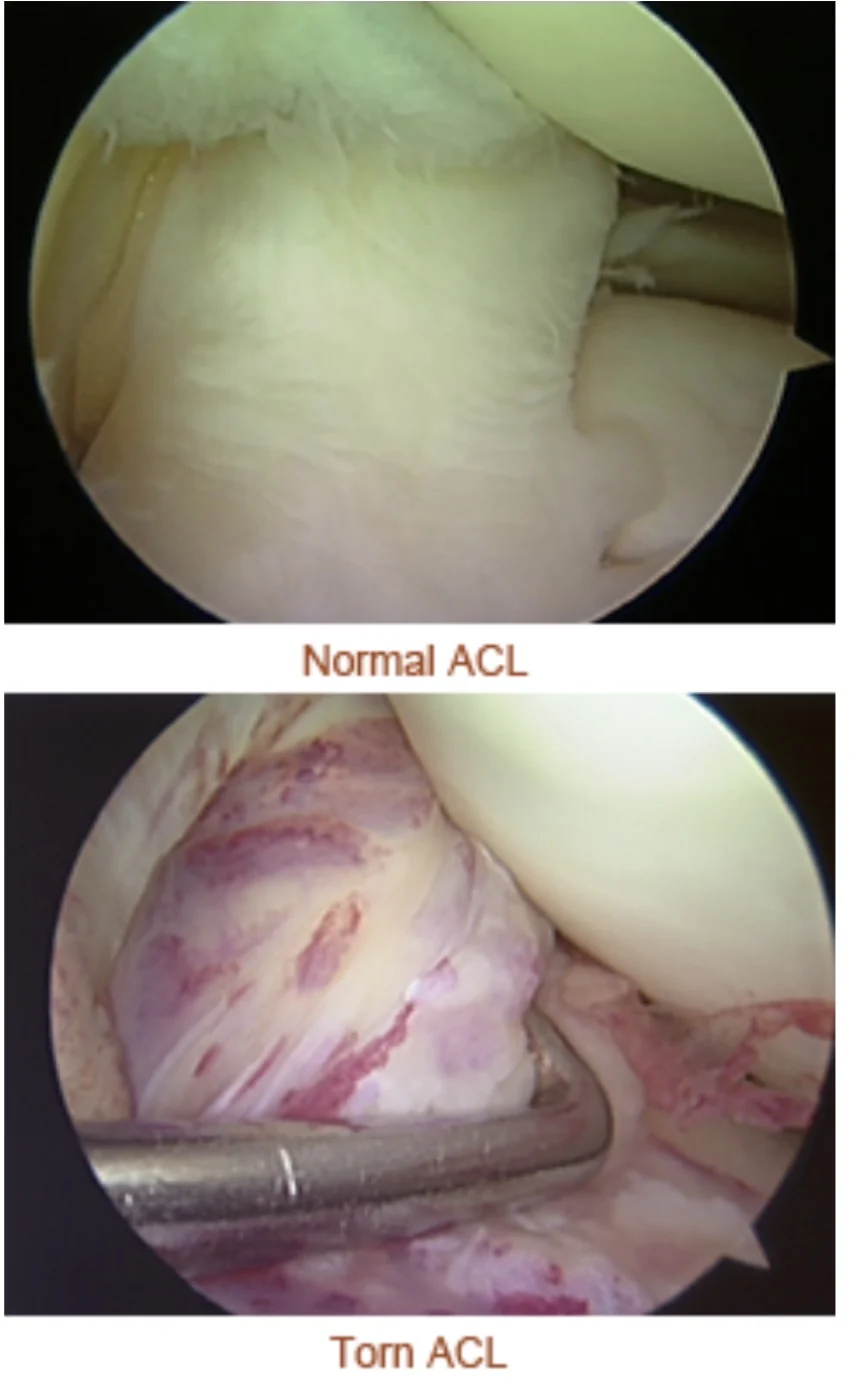
The anterior cruciate ligament runs through the middle of the knee and stops the shin bone sliding forward and rotating on the thigh bone. Once torn, it does not heal back, which is why a knee with an ACL tear tends to give way when you turn.
Reconstruction does not stitch the old ligament back together. A new ligament is built from a graft — usually a tendon taken from your own leg — and fixed into tunnels drilled in the bone, all through the arthroscope.
Who it is for
- A knee that gives way or feels unstable when turning, pivoting, or on uneven ground
- A confirmed ACL tear on examination and MRI, particularly in someone who wants to return to sport
- An ACL tear together with a meniscus tear that needs repair
- A physically demanding job or lifestyle where an unstable knee is unsafe
Not every ACL tear needs surgery
Some people, particularly those who do not play pivoting sports, manage well with a strong rehabilitation programme and no surgery. The decision depends on your instability, your activities, and any associated injuries.
- Pre-operative physiotherapy to settle swelling and restore full movement improves the outcome of surgery
- A knee that is still stiff and swollen at the time of surgery is more likely to be stiff afterwards
- Associated meniscus and cartilage injuries often influence the timing
Recovery, honestly
Weeks 0–2
Controlling swelling, regaining full straightening of the knee, and activating the quadriceps. Walking with support, often with a brace.
Weeks 2–6
Progressive weight-bearing and range of movement, with a structured physiotherapy programme.
Months 2–4
Strength work, balance and control training. Straight-line jogging is typically introduced towards the end of this period if criteria are met.
Months 4–9
Sport-specific training, agility, and gradual reintroduction of cutting and pivoting.
9–12 months
Return to competitive pivoting sport is generally considered around this point, and should be based on strength and control testing rather than the calendar alone.
Questions patients ask
Straight-line running often returns around three to four months, but a return to competitive pivoting sport such as football, kabaddi, or basketball is usually around nine to twelve months. Returning too early carries a real risk of re-tearing the graft.
Most commonly from your own body — typically the hamstring tendons or part of the patellar tendon. Each graft has trade-offs in strength, recovery, and donor-site discomfort, which your surgeon will explain.
Some people can, particularly those who avoid pivoting activities and commit to strengthening. But repeated giving-way episodes can damage the meniscus and cartilage over time, which is a key reason surgery is advised for active patients.
Yes — arguably more than the surgery itself. The operation restores the anatomy; the rehabilitation restores the function. Poor rehabilitation is the most common reason for a disappointing result.
How it is done at Poona Orthopaedic Clinic
Knee arthroscopy is Dr. Atul Keswani’s area: keyhole surgery done at an affiliated hospital through two small incisions, usually with the patient home the same day or the next morning. Where a meniscus can be repaired rather than trimmed it is, because a repaired meniscus protects the joint for years to come. For an ACL reconstruction the graft is chosen for the individual — their sport, their age and their other injuries — and the rehabilitation programme is agreed with the patient and the physiotherapist before the operation, because the result depends on it as much as on the surgery.
- A confirmed diagnosis on examination and MRI before surgery is offered
- Day-care or overnight keyhole surgery at an affiliated hospital
- Meniscus: repair in preference to removal wherever the tear allows
- ACL: the graft choice explained beforehand, and a structured, phased rehabilitation programme from the first week
- A written rehabilitation plan matched to what was actually done, reviewed at follow-up visits in Kondhwa
- Return to sport judged on strength and function, not on the calendar
Recovery, honestly
Timelines vary between patients. This is the usual shape of recovery rather than a promise about your own.
Day of surgery
Most patients go home the same day, walking with support, with the knee wrapped.
Week 1
Rest, elevation, and gentle movement. Wound checks and early physiotherapy begin.
Weeks 2–6
After a diagnostic arthroscopy or a meniscus trim, walking normally and returning to desk work is usual within a couple of weeks.
Meniscus repair or ACL reconstruction
These take longer and are deliberately protected in the early weeks — see the timelines for each procedure above.
Questions patients ask
It is far less invasive than open surgery — usually two or three small incisions and a same-day discharge — but it is still an operation under anaesthesia, with the usual risks that need discussing.
Most patients walk with support on the day of surgery. How quickly you return to full weight-bearing depends on what was done — a meniscus repair or an ACL reconstruction is protected for longer than a trim.
No. Arthroscopy treats mechanical problems inside the knee. For established arthritis, the useful options are non-surgical management or, when pain becomes disabling, knee replacement.
What patients say
Experiences with knee arthroscopy live on the clinic’s Google profile, exactly as patients wrote them — we link to reviews rather than curating them here.
Related symptoms
Related treatments
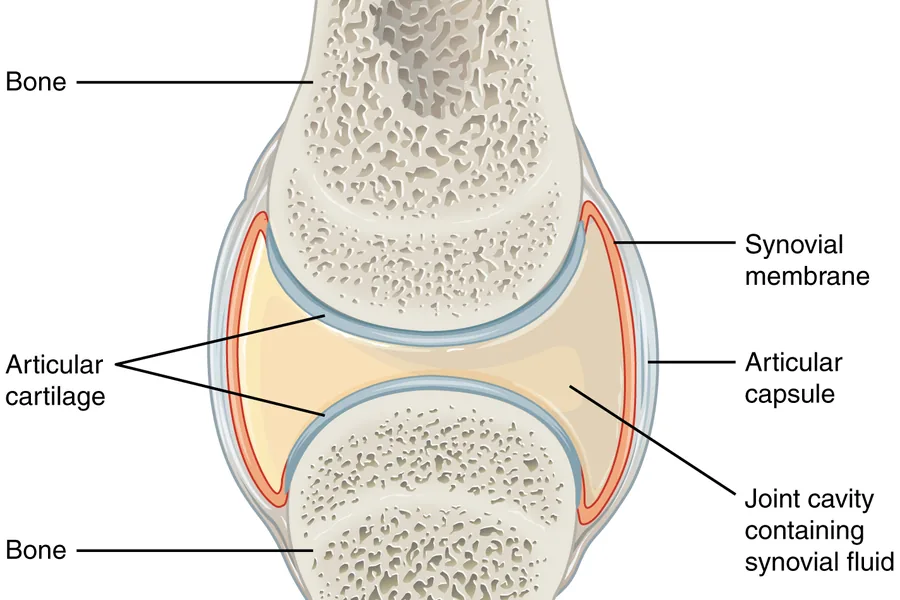
Non-surgical arthritis care
A structured plan to control arthritis pain and keep you active — for the many patients who do not need surgery, or who are not ready for it.
Read more
Robotic knee replacement surgery
Resurfacing a knee worn down by arthritis, with robotic assistance to place the implant exactly to plan — less pain after surgery, a faster recovery, and a knee that lets walking, stairs and sleep stop hurting.
Read more
Joint injections
Targeted injections used to settle inflammation and pain in a specific joint or tendon, usually to make rehabilitation possible.
Read moreConsidering knee arthroscopy?
Bring your X-rays or MRI if you have them. A consultation should leave you clear about what is wrong, what the options are, and what happens if you wait.