Knee ligament injuries
Four main ligaments hold the knee together. Which one is torn, and how badly, decides whether a brace and physiotherapy will do or whether the ligament needs reconstructing.
At Poona Orthopaedic Clinic, Kondhwa, Pune — Dr. Atul Keswani and Dr. Harish Keswani.
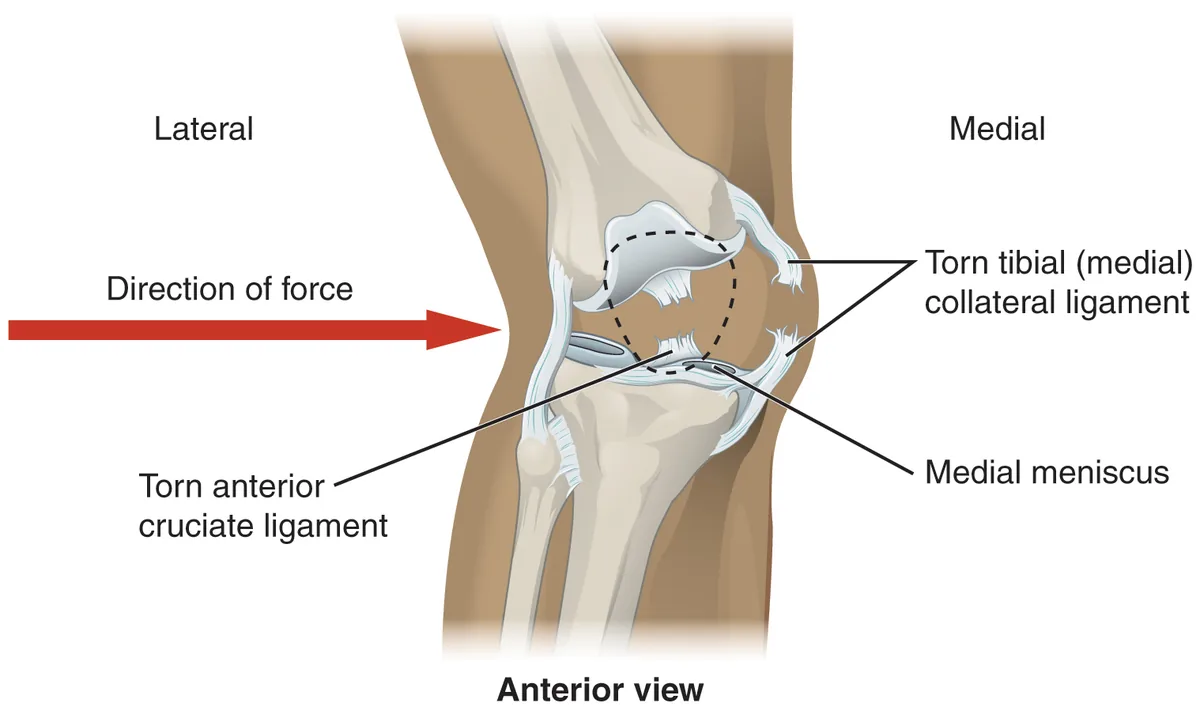
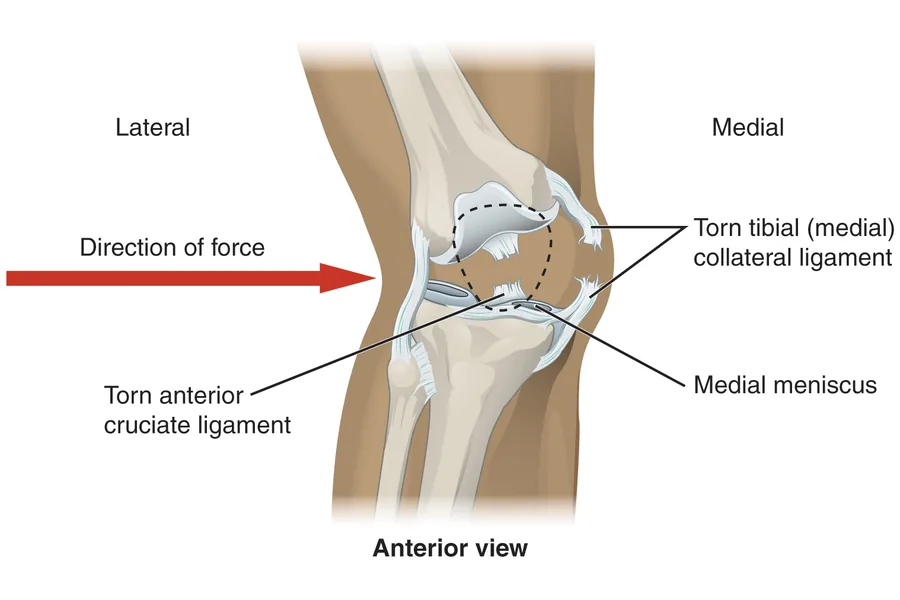
The knee is held together by four main ligaments: two that cross inside the joint (the anterior and posterior cruciate ligaments, ACL and PCL) and two along its sides (the medial and lateral collateral ligaments, MCL and LCL). They are injured by twisting, by a blow to the side of the knee, or by a fall onto a bent knee — on the sports field, on a two-wheeler, or slipping on a wet floor.
Ligament injuries are graded by how much of the ligament is torn: a stretch (grade 1), a partial tear (grade 2) or a complete tear (grade 3). The collateral ligaments usually heal on their own with a brace and physiotherapy; a completely torn ACL does not. Telling them apart early, by examination and often an MRI, decides the plan.
Common causes
ACL tear
A twist or sudden change of direction, often with a pop and swelling within hours. The knee later gives way when turning. The commonest serious ligament injury in sport; a complete tear does not heal on its own.
MCL sprain or tear
A blow to the outer side of the knee, or a twist that forces it inwards. Pain and tenderness along the inner side of the knee. Most MCL injuries heal in six to twelve weeks with a hinged brace and physiotherapy.
PCL tear
A fall onto a bent knee, or the knee striking the dashboard in a road accident. Often less dramatic at the time; many isolated PCL tears are treated without surgery.
LCL and posterolateral corner injury
A force that pushes the knee outwards. Less common, but often combined with other ligament injuries and more likely to need surgery to restore stability.
Multi-ligament injury or knee dislocation
A high-energy injury that tears two or more ligaments. This is an emergency: the blood vessels and nerves behind the knee can be injured and must be checked straight away.
When to see a doctor
- A knee that swelled within a few hours of a twisting injury
- A knee that gives way, feels loose or "comes out" when turning
- Pain along the inner or outer side of the knee after a blow or a twist that is not settling after a week or two
- Being unable to return to sport, or to straighten the knee fully, after an injury
- An injury where you heard or felt a pop
Signs that need urgent care
Do not wait for an appointment if you have any of these — go to an emergency department.
- — A knee that looks deformed, or that you felt dislocate — go to an emergency department
- — A cold, pale or numb foot after a knee injury
- — Being unable to put any weight on the leg
- — Severe swelling that keeps increasing
What helps in the meantime
- In the first two days: relative rest, ice over a cloth for 15 minutes a few times a day, a compression bandage and keeping the leg raised
- Use crutches if walking is painful, but start gentle bending and straightening early
- Tighten the thigh muscle (a "quad set") several times an hour to keep it working
- Avoid sport, twisting and running until the knee has been examined
What a consultation involves
A ligament assessment at the clinic starts with how the injury happened and a hands-on examination that tests each ligament in turn, which is often more informative than a scan. An X-ray rules out a fracture; an MRI confirms which ligaments are torn and whether the meniscus or cartilage is injured too. Collateral ligament injuries are usually treated with a hinged brace and a graded physiotherapy programme. A completely torn ACL in an active person, a knee that keeps giving way, or a combined ligament injury is discussed for reconstruction. Sports and ligament injuries are seen by Dr. Atul Keswani.
Questions patients ask
Some do. MCL injuries, and many PCL injuries, heal well with a brace and physiotherapy. A completely torn ACL does not heal back, although some people manage without reconstruction if the knee stays stable.
As a guide, a grade 1 sprain settles in two to four weeks, a grade 2 in four to eight weeks, and a complete collateral ligament tear in about eight to twelve weeks with a brace. A complete ACL tear is different: the choice is between rehabilitation alone and reconstruction, and after reconstruction a return to pivoting sport takes nine to twelve months.
Often, if the examination suggests a significant tear, the knee swelled quickly, or surgery may be needed. MRI shows which ligaments are torn and whether the meniscus or cartilage is injured too. An X-ray comes first if a fracture is possible.
The ACL is inside the knee and controls twisting; when it tears the knee usually swells within hours and later gives way when turning. The MCL runs down the inner side and stops the knee bending inwards; when it tears the pain is along the inner side and there is usually less swelling inside the joint. MCL tears mostly heal with a brace; a complete ACL tear does not heal on its own.
Not until it has been examined. Swelling settles quickly after an ACL tear and the knee can feel normal in a straight line, but it may give way the first time you turn — and each giving-way episode risks damaging the meniscus and cartilage.
What patients say
Experiences with knee ligament injuries live on the clinic’s Google profile, exactly as patients wrote them — we link to reviews rather than curating them here.
How knee ligament injuries is treated
Depending on the cause and how far it has progressed, these are the treatments that usually come into the conversation.
ACL reconstruction surgery
Keyhole reconstruction of a torn anterior cruciate ligament in Pune: a new ligament built from a graft, a phased rehabilitation programme from the first week, and a return to sport judged by strength and stability rather than the calendar.
Read more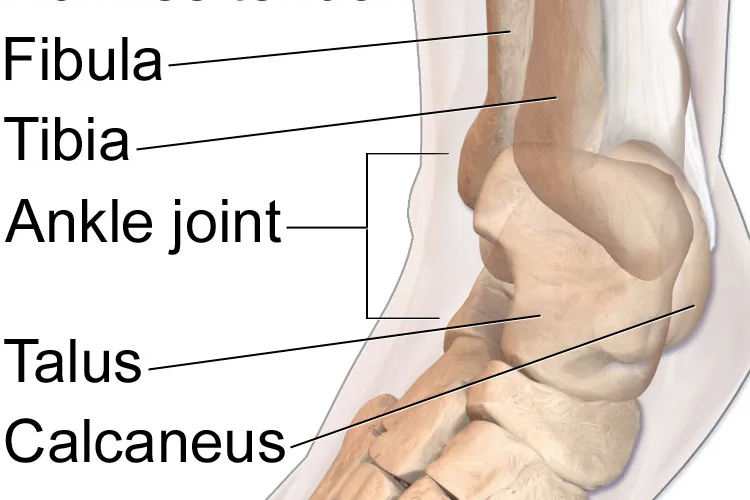
Sports injury and sports medicine clinic
A sports injury clinic in Pune for knee, shoulder and ankle injuries — ACL and ligament tears, meniscus tears, shoulder dislocation and rotator cuff injuries, and overuse pain — assessed by a fellowship-trained sports injury surgeon, with rehabilitation first and keyhole surgery where it is needed.
Read more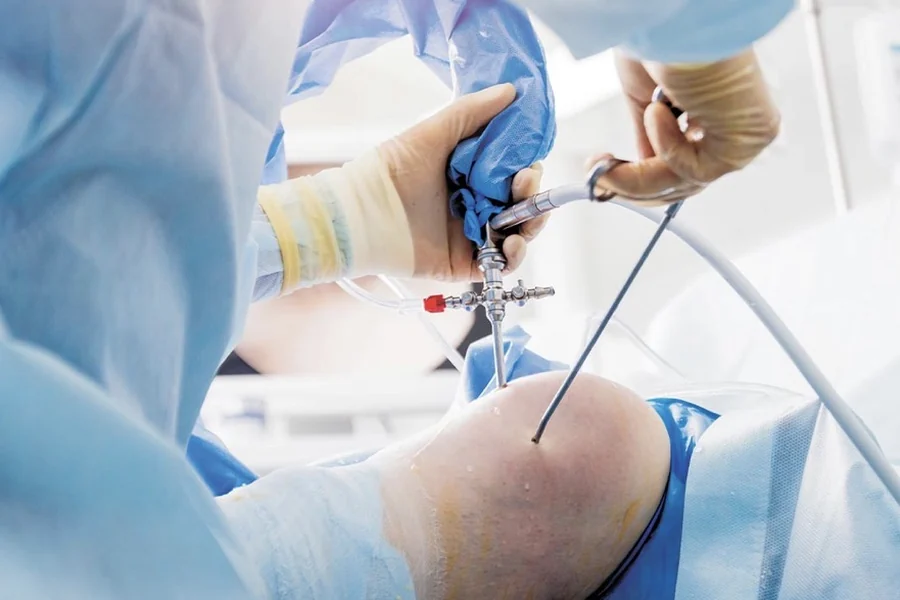
Knee arthroscopy
Keyhole knee surgery — a camera and fine instruments through two small incisions — for meniscus tears, ACL reconstruction, loose fragments and damaged cartilage.
Read moreOther conditions
Living with knee ligament injuries?
An examination narrows things down quickly. Bring any scans you already have and you will leave knowing what is actually wrong.